Bookings
Quick answer - Bookings is where staff manage the diary. Use it to check the day, create appointments, open existing bookings, and spot diary issues before customers arrive.
Use this guide when - Front desk, operations, barbers, stylists, consultants, or managers need to work from the live appointment diary.
Before you start - Make sure services, availability, business hours, and the public booking page are set up.
Open the bookings calendar
- Choose Bookings from the left menu.
- Use the calendar controls to move between dates.
- Use Day, Week, or Month depending on what you need to check.
- Choose New Booking when staff need to add an appointment manually.
- Use Sync Issues if your account connects to an outside calendar and something looks wrong.
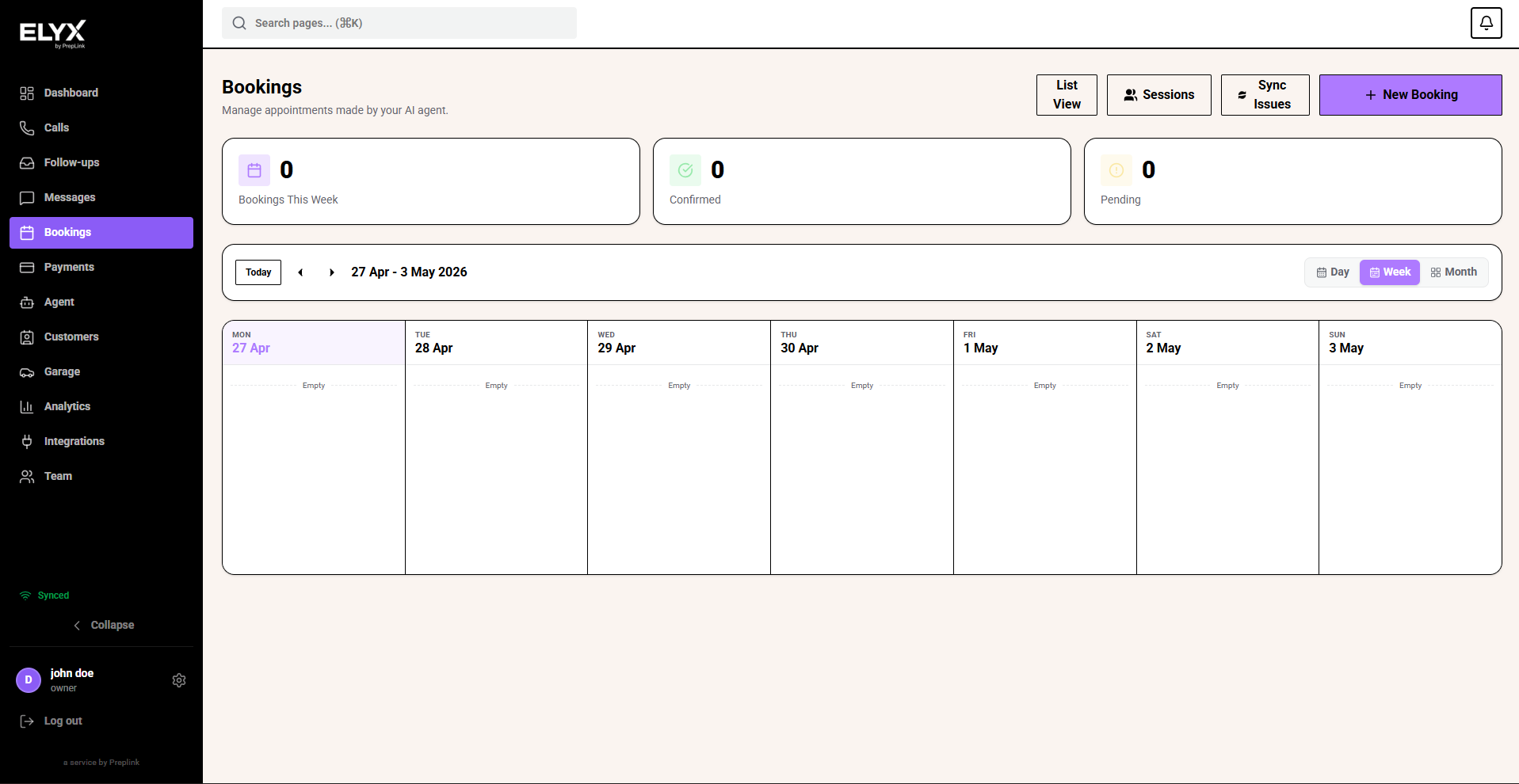
Use week view
Week view is useful when you are planning staff coverage or checking the next few days.
- Look at the total bookings for the week.
- Check confirmed and pending counts.
- Scan each day for busy periods.
- Open a booking if the customer, service, or time needs checking.
- Move to the next week if you are planning ahead.
Week view helps spot heavy days before they become stressful, especially when one staff member, room, or resource is busier than the others.
Use month view
Month view is best for a quick overview.
- Choose Month.
- Look for days with bookings.
- Open a day to see its appointments in more detail.
- Use this view for holiday planning, seasonal checks, and quick diary reviews.
Use day view
Day view is best during the working day.
- Choose Day.
- Check the time grid from morning to evening.
- Watch for empty gaps, back-to-back appointments, and double-booking risks.
- Open appointments from the grid when details need changing.
- Add walk-ins or phone bookings with New Booking.
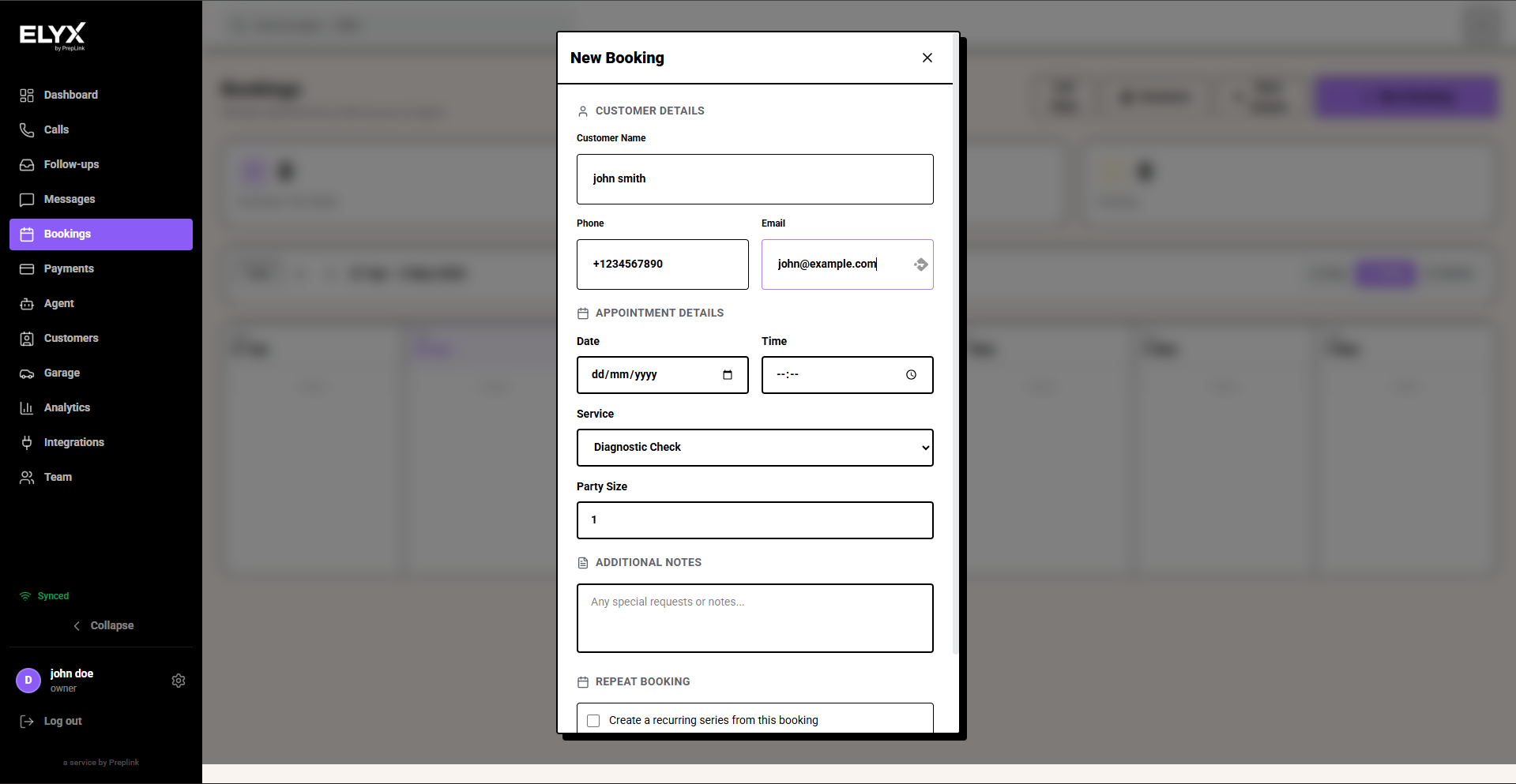
Create a manual booking
Use manual booking for walk-ins, phone calls, email requests, DMs, partner bookings, or appointments that staff agree in person.
- Open Bookings.
- Choose New Booking.
- Add the customer name.
- Add the phone number.
- Add the email if you have it.
- Choose the appointment date and time.
- Choose the service.
- Set party size only if the booking supports more than one person.
- Add short notes staff need to know.
- Use repeat booking only when the customer should be booked on a regular pattern.
- Save.
Useful notes tell the team what to do. “Prefers John if available” or “Arriving with child” is useful. “Nice customer” is not enough to change how staff handle the appointment.
Review an existing booking
- Open Bookings.
- Find the booking in day, week, month, or list view.
- Open it.
- Check customer name, phone number, service, date, time, status, and notes.
- Correct details if needed.
- Contact the customer if the booking needs confirmation.
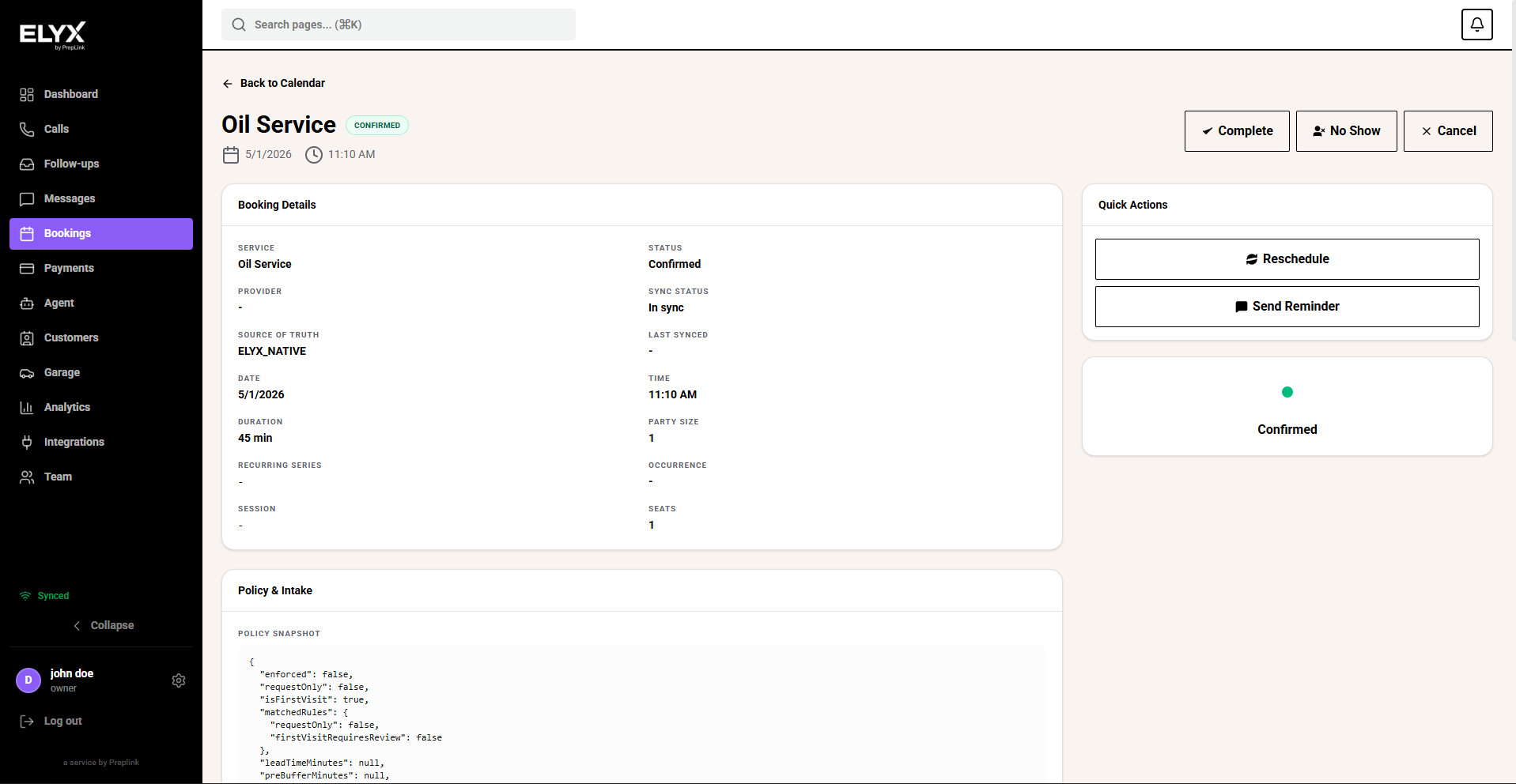
Reschedule a booking
- Open the booking.
- Choose Reschedule or edit the date and time.
- Pick the new slot.
- Save.
- Send an update message if Resk offers it.
- Check any connected calendar if you use one.
Cancel a booking
- Open the booking.
- Choose Cancel.
- Choose a reason if Resk asks.
- Decide whether to notify the customer.
- Save.
- Check whether any payment, deposit, or follow-up remains.
Do not cancel silently if the customer still expects to arrive.
If slots are wrong
Fix the setup behind the booking:
- Open Availability and business hours.
- Check opening hours.
- Check service duration.
- Check staff, room, bay, or resource rules where used.
- Check gaps and booking windows.
- Check calendar timezone.
- Try the booking again.
Daily booking routine
At opening:
- Check today’s bookings.
- Review notes.
- Check unconfirmed or unusual bookings.
During the day:
- Add walk-ins or phone bookings.
- Reschedule changes immediately.
- Keep customer notes clear and short.
At close:
- Check tomorrow.
- Confirm staff, rooms, tables, or bays are ready.
- Resolve failed sync or calendar issues.
Common mistakes
- Creating a duplicate booking because the customer called and emailed.
- Cancelling without telling the customer.
- Changing outside calendar events directly when Resk is supposed to manage the booking.
- Forgetting to check timezone after daylight saving changes or calendar reconnects.
Related articles
Last updated: April 2026